
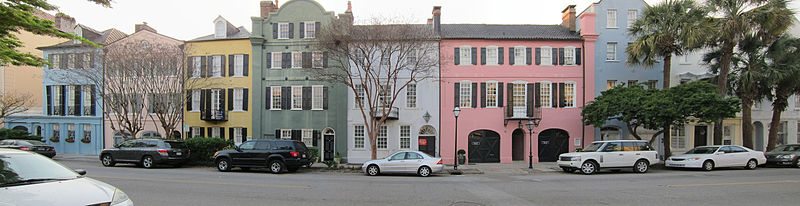
Rainbow Row is one of Charleston, South Carolina’s most recognizable landmarks. Located along East Bay Street in the historic South of Broad neighborhood, this collection of 14 colorful historic homes is famous for its pastel-painted facades and beautifully preserved architecture.
The row houses are among the most photographed places in Charleston and are a must-see stop for visitors exploring the city’s historic streets.
Rainbow Row is also featured on our Historic Charleston Walking Tour, where guests learn about Charleston’s architecture, history, and the stories behind some of the city’s most famous landmarks.
Where Is Rainbow Row Located?
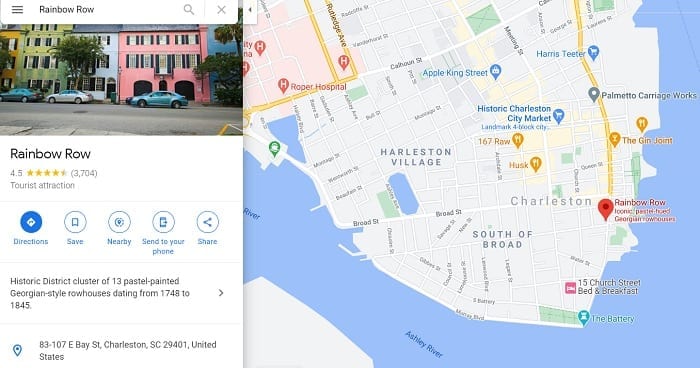
Rainbow Row is located along the east side of East Bay Street between Tradd Street and Elliott Street in Charleston’s historic district.
The colorful houses are located in the South of Broad neighborhood, one of the oldest and most historic areas of Charleston, and they are only a short walk from Waterfront Park.
Address:
83–107 East Bay Street
Charleston, South Carolina
From Waterfront Park, Rainbow Row is only a few minutes away on foot. Walk north along East Bay Street and you will quickly spot the famous pastel-colored homes.
Why Is Rainbow Row Famous?
Rainbow Row is famous for its 14 historic row houses painted in shades of pink, yellow, blue, green, and other pastel colors.
These homes are a great example of the architectural style that makes Charleston unique, including:
- Narrow townhouses built close together
- Tall windows designed for airflow
- Side porches known as piazzas
- Historic brick and stucco exteriors
The colorful facades make Rainbow Row one of the most recognizable views in Charleston and one of the city’s favorite photography locations.
The History of Rainbow Row
The homes that make up Rainbow Row date back to the 18th century, with some buildings constructed as early as the 1740s.
Originally, this section of Charleston was part of the city’s commercial waterfront district. Many of the buildings served as both businesses and residences. Merchants operated shops on the ground floor while living above their stores.
Because of its location near the harbor, this neighborhood was once one of the busiest parts of Charleston.
From Decline to Restoration
After the Civil War, many buildings in this area fell into disrepair. The waterfront neighborhood experienced years of decline before preservation efforts helped restore these historic homes.
If you'll be driving through the city, East Bay Street is also Highway 52 headed south to water, you'll see Rainbow Row on your right once you pass Elliot Street.
The Origins Of Rainbow Row
After the Civil War, many buildings in this area fell into disrepair. The waterfront neighborhood experienced years of decline before preservation efforts helped restore these historic homes.
In the 1930s, preservationist Dorothy Porcher Legge purchased several of the houses and painted them a pastel pink. Her restoration work helped inspire others to renovate the remaining homes along the row.
Over time, additional houses were restored and painted in different pastel shades, creating the colorful street Charleston visitors recognize today.
Why Are the Houses Painted Different Colors?
There are several stories about why the homes were painted in bright colors.
One popular legend claims that the colors helped sailors find their homes after returning from the harbor. Another story suggests merchants used colors to identify their businesses.
However, historians generally believe the pastel colors were part of the restoration efforts that began in the 20th century rather than an original tradition from the colonial period.
Today, the colors are one of the reasons Rainbow Row has become such an iconic Charleston landmark.
Can You Visit Rainbow Row?
Yes! Rainbow Row is located on a public street and visitors can walk past the homes, take photographs, and admire the architecture at any time.
The best times to visit are:
- Early morning for fewer crowds and better photos
- Late afternoon when the sunlight highlights the pastel colors
- During a walking tour to learn the history behind the buildings
While Rainbow Row is beautiful on its own, understanding the history of Charleston’s neighborhoods makes the experience even more meaningful.
Visit Rainbow Row on a Charleston Walking Tour
Rainbow Row is just one of many historic landmarks you’ll see while exploring Charleston.
On our Historic Charleston Walking Tour, you’ll discover the stories behind Charleston’s historic streets, architecture, and landmarks while learning how the city developed over nearly 350 years.